From idea to reality
Our journey began with a powerful idea: to reduce accidents and protect wildlife on our roads. Witnessing the impact of collisions between vehicles and animals, we saw a solution. Today, our mission is clear – to revolutionize road safety with innovative, affordable, science-based solutions. We’re drive by a vision of safer roads, preserved ecosystems, and a better future for all, with an unwavering commitment to make it a reality. Our belief in technology’s power to bridge human mobility and environmental conservation fuels our dedication.
How did it start?
Catalyzed by a visionary idea, scientists from Kaunas University of Technology embarked on a journey to redefine road safety. Motivated by a deep concern for the rising accidents involving vehicles and wildlife, they established the foundation for a groundbreaking road safety device. Their profound commitment to scientific research and innovation in the past led to the creation of a device that stands as a testament to their dedication, making our roads safer for everyone.
Main problem and existing solutions
While other road safety solutions have been implemented in the past, they often fall short in several critical aspects. Firstly, many of these solutions come at a significant cost, making them financially burdensome for municipalities and organizations. The high expenses associated with their implementation limit their widespread adoption. Secondly, the effectiveness of traditional methods, such as reflective signs and static speed limits, can be questionable, particularly when it comes to preventing accidents involving wildlife. These methods lack the real-time responsiveness needed to address dynamic road hazards adequately. Additionally, their one-size-fits-all approach fails to account for the unique challenges presented by various road types and environments. Lastly, many existing solutions do not consider the boarder ecological impact of road safety measures, inadvertently neglecting wildlife preservation. In contrast, our Road Safety Device is designed to overcome these limitations, offering an affordable, proactive, and eco-friendly solution that ensures safety for all road users and protects our natural world.
Product prototyping
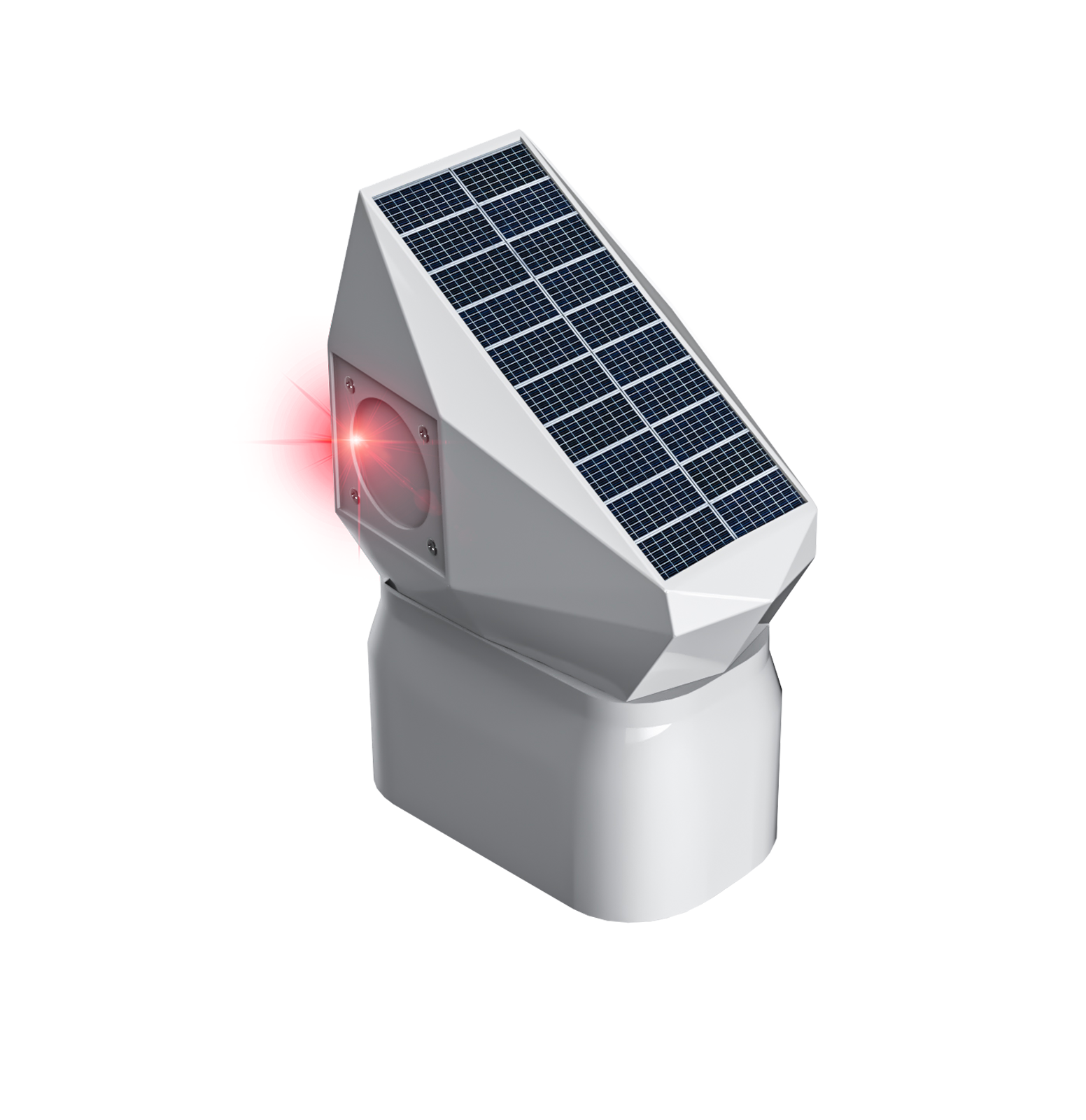
Our Road Safety Device journeyed from conception to reality through a meticulous process of prototyping, design, and manufacturing. In the prototyping phase, we rigorously tested and refined our concept, incorporating expert insights and feedback. The design phase focused on user-friendliness and versatility, ensuring easy attachment to road guideposts and adaptability to diverse road environments. We prioritized high visibility for the safety alert, making it impossible to ignore for approaching drivers. During manufacturing, we collaborated with trusted partners to uphold the highest industry standards, ensuring each device’s precision, durability, and consistent performance.
Further development
We embarked on a comprehensive analysis of the driving areas where our devices were attached to guideposts. This analysis involved in-depth assessment and data collection to evaluate the device’s performance in real-world conditions. We carefully studied driver response, wildlife behavior, and accident rates in the areas of development. This data-driven approach allowed us to make informed decisions regarding device sensitivity levels, optimal positioning on guideposts, and the timing of safety alerts. We also collaborated closely with local communities and road safety experts to incorporate valuable insights into our decision-making process. The result was an even more refined and effective Road Safety Device, fine-tuned to the specific needs and challenges of each driving area.
Implementation / testing
Once our Road Safety Device reached the implementation phase, we strategically deployed it in selected drive areas for real-world testing. This critical step allowed us to evaluate its effectiveness under diverse road conditions and traffic scenarios. Our team worked close with local authorities and road safety experts to idenfity high-risk zones where accidents involving wildlife were prevalent. These drive areas became the testing grounds for our device. Through extensive field testing and monitoring, we gathered valuable data on its performance, including driver response, accident prevention, and its impact on wildlife behavior. This data not only informed further refinements to the device but also contributed to a deeper understanding of road safety dynamics in different environments. As a result, our Road Safety Device emerged as a reliable, field-tested solution that provides real-time protection on the roads while preserving wildlife habitats.
Real time situation
The LAUGAS system provides real-time monitoring of selected road sections where wildlife crossings are likely to occur. When movement is detected near the road, the system automatically activates visual warning signals to inform approaching drivers about a potential hazard.
This approach allows road users to receive timely information based on actual conditions, rather than only general warnings. As a result, drivers can reduce speed earlier and react more safely.
In addition to warning drivers, the system can register activation events and collect data about wildlife movement patterns. This information may be used for road safety analysis, infrastructure planning, and identifying sections where additional protection measures are needed.